
The Path You’re Meant to Take
Why are you here? You specifically, with your talents, your interests, your experiences. Do you know your purpose in the world, or are you looking for one?
This month, we delve into the topic of Calling. Do people feel they are called to a particular vocation or have a deeper meaning for their life? The answer is “yes.” Most Americans (65%) say they have at least a moderate understanding of their calling as it applies to their life.
But why does it matter?
We found something significant: having a sense of calling is an important predictor of a flourishing life. And our research suggests the Bible plays a key role in helping people find their calling. It supports and guides us on the path toward a fulfilling life, not least because it tells us about the One who calls.
Calling Leads to Flourishing
God created us with a calling: to cultivate, protect, and fill the world he made. From working the land, to caring for children, to exploring new places, to tending to the animals, God gave work to Adam and Eve before sin entered the world. It was a blessing, not a curse.
The work we do, whether it’s income producing, a passion project, or even mundane tasks that keep the clothes clean and the fridge stocked, are meant to nurture and cultivate life around us. And the interesting thing is that living out our callings also produces a flourishing life within us.
For several years, our research has included questions from Harvard’s Human Flourishing Index, which assesses well-being across five areas of life. When we looked at the relationship between Calling and Flourishing we were surprised by how important it is.
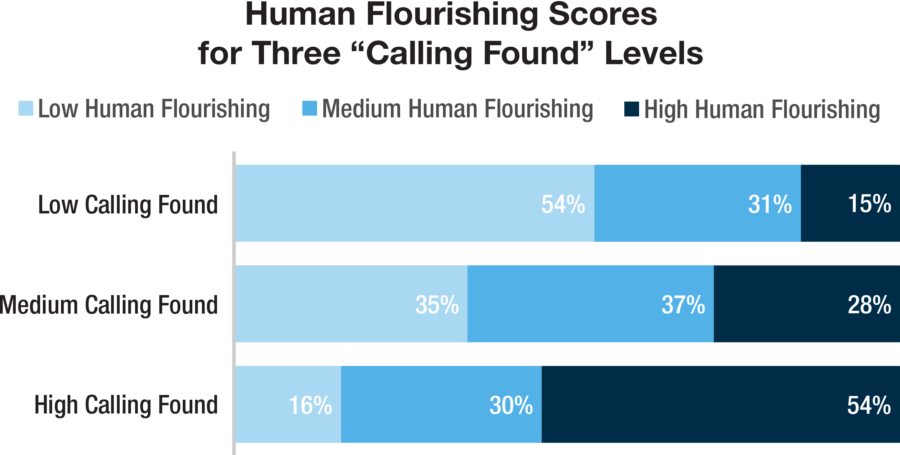
We found that people who are living out their calling are thriving. Those with a high sense of calling score high on Human Flourishing. Those with a low sense of calling score low on Human Flourishing.
Meaning & Purpose is one of the five domains in the Human Flourishing Index. We weren’t surprised to see a correlation with Calling on this one. But we also see meaningful correlations between Calling and all the other domains of Human Flourishing. These are Life Satisfaction, Character & Virtue, Physical & Mental Health, and Close Social Relationships. “Calling Found” is more likely to predict Human Flourishing (along with its various domains) than any other variable in our dataset—including faith factors. We see in the data that people who are engaged in Scripture have a significantly stronger sense of calling than those who aren’t, but having a sense of calling is clearly a fundamental human experience.
Where People Find Their Calling
Americans who regularly engage with the Bible are the most confident in their life calling. Those who are Scripture Engaged report the highest levels of calling (scoring 7.4 out of 10), whereas Bible Disengaged report the lowest (5.4). People in the Movable Middle—open to the Bible and often curious about it but not committed—are the most likely to say they are searching for their calling. The Bible offers real insight to their big questions about life, purpose, and fulfillment.
When Life is Disrupted…
This is all well and good, but what happens when life takes a turn for the worse? When we inevitably experience negative life events that take us off course or interrupt our plans? We call these challenging life events “disruptors”.
This year, we asked Americans which of nine major life events they had experienced during the past year. Here are the top 3:
- A quarter of Americans have experienced the death of a close friend or family member
- One in eight have experienced unemployment
- One in ten have experienced a life-threatening illness or injury.
Out of all disruptors in our survey, unemployment has the greatest negative effect on Human Flourishing scores. It also increases stress and anxiety while decreasing hope. This is no surprise, as people looking for work score lowest on “Calling Found” (5.1) and highest on “Searching for Calling” (6.4). Employment is often related to calling—and to lose a job where we may have felt “called,” or one that made it so we could provide for our families, can be a huge discouragement.
…People Turn to the Bible
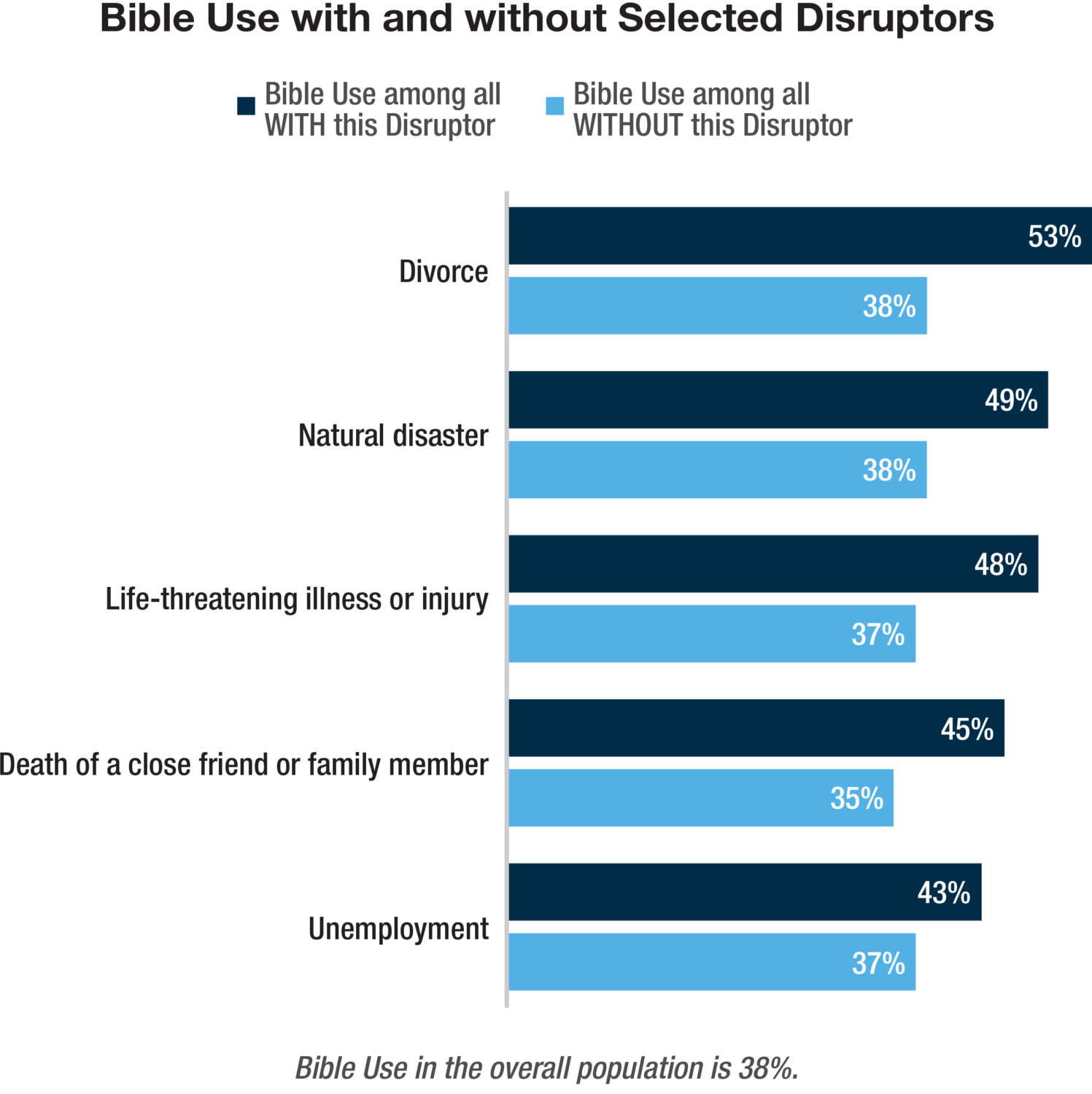
When life events throw us off course, where do people turn to find comfort or their next right step? Here we found something interesting: people experiencing challenges are more likely to turn to the Bible. People who have experienced a negative life event in the past year were significantly more likely to be Bible users than those who hadn’t experienced that challenge.
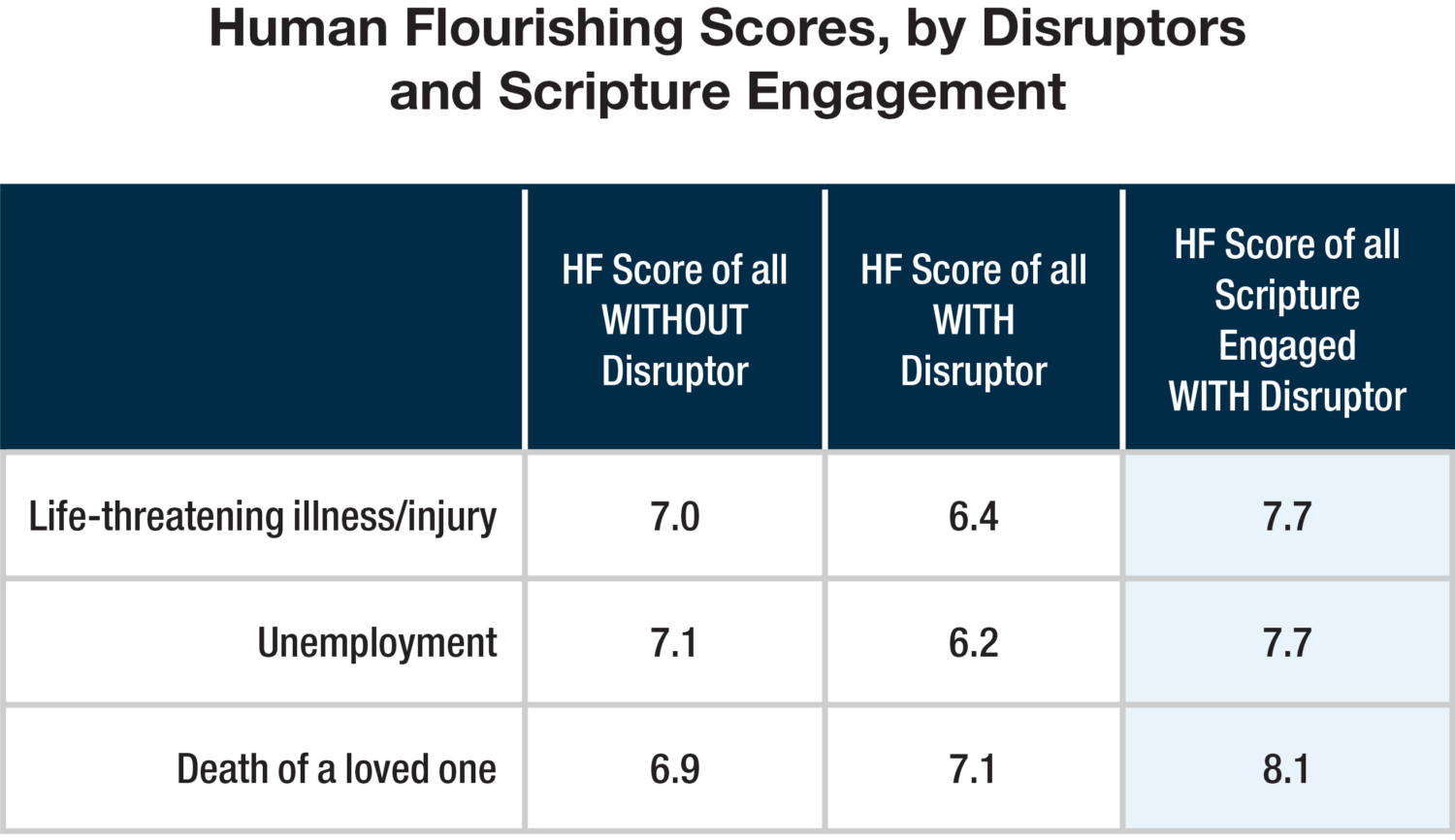
Here’s another important finding: Human Flourishing scores show that Bible reading during a life disruption helps people persevere. Amidst hardships, those who regularly engage with Scripture maintain significantly higher flourishing scores. Life challenges happen to everyone, and when they happen, they affect our overall flourishing. But Scripture Engagement seems to neutralize their negative effects and produces a sort of resiliency in the midst of suffering.
He Who Calls You Is Faithful
Our life journeys never go according to our plans. And yet there is meaning and purpose even in the disruptions. Our pain, suffering, and trials can cause us to cling to Jesus more tightly and look toward the eternal hope he has secured for us. In seasons of fullness—even when we energetically pursue our life plan, successes, joys, and hopes can distract us. Could there be just as much purpose in our life disruptions (when things go wrong) as our sense of calling (when things go right)?
When someone in your church experiences a life disruption, you can be ready to help them find the next step as they look for comfort and discover where God may be leading.
Why are you here?
Our first call is to follow Christ.
All our specific callings and life stories blend to achieve this still greater calling. We are Christ’s hands and feet in this world, and we proclaim the goodness of God “who called you out of darkness into his own marvelous light” (1 Peter 2:9).
To get the full story on Calling, Disruptions, Flourishing, and the Bible, download Chapter 4 of State of the Bible 2026 for free. If you’d like to use any graphs or charts from the chapter in a presentation or sermon, grab our accompanying Chapter 4 Toolkit download, also free!