
A few highlights from Chapter 5: Church Health
Troubled or Thriving?
On a scale of 1-10, how healthy is the church in America?
There are reasons to believe the church isn’t very strong. Headlines about church scandals and denominational fractures paint that picture. But the reality is more complex than this. In our research, we see an intriguing dichotomy. While half of self-identifying Christians in our country don’t regularly attend church, those who do say their churches are genuinely helping them grow. Though there’s a massive discipleship gap in America, individual churches are healthier than we might expect.
In the Church Health chapter of State of the Bible 2026, we looked at five marks of a healthy church.
But before we zero in on the spiritual growth and satisfaction of churchgoers, let’s take a quick look at church attendance in America.
Showing Up is the First Step
Over half of self-identifying Christians in America don’t attend church on even a monthly basis. That’s a lot of nominals— people who claim a Christian faith but don’t engage in one of the defining practices of the Christian faith: going to church.
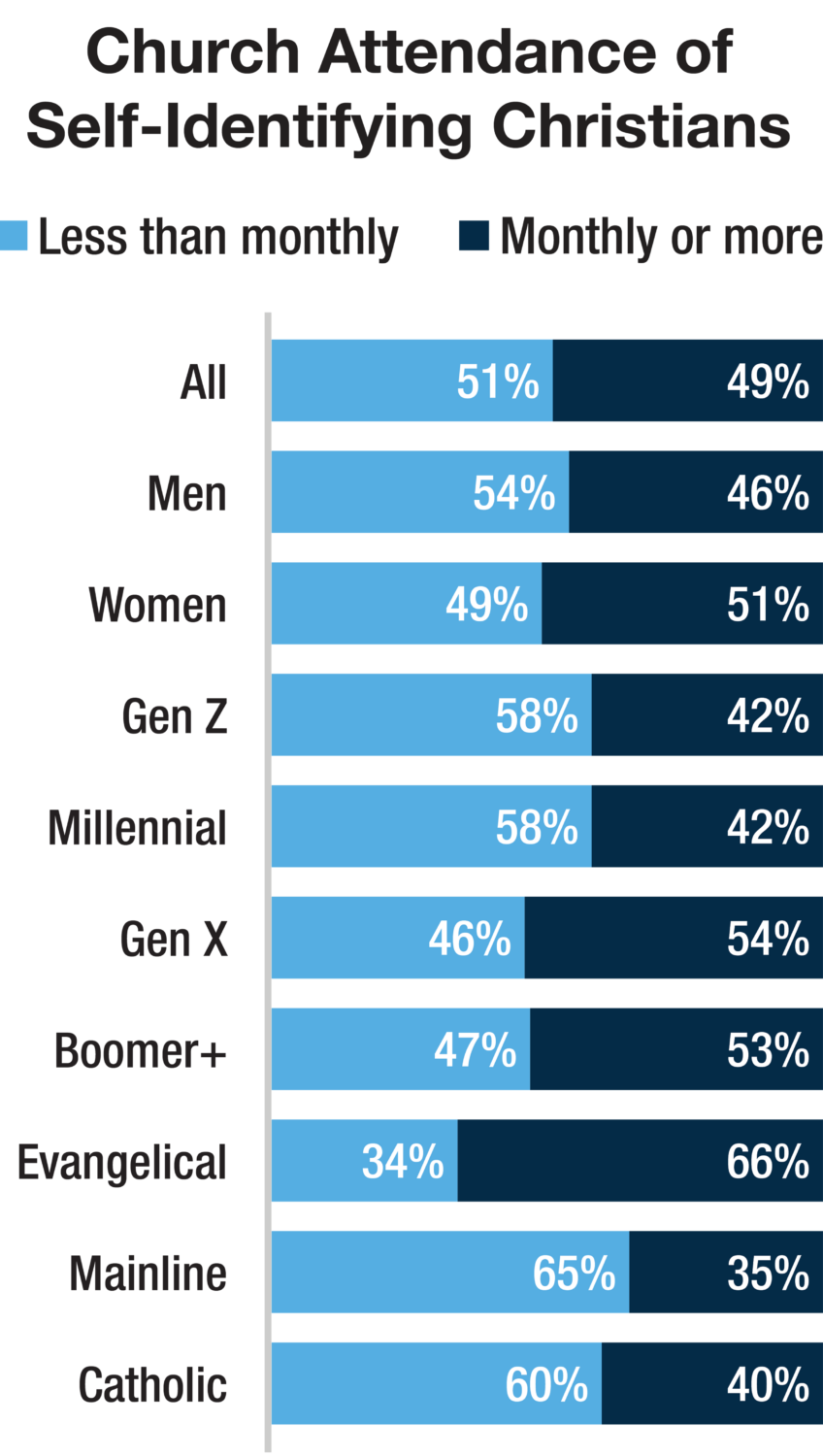
Some population groups struggle with attendance more than others:
- Christian men are less likely to attend church than Christian women.
- The majority of young adult Christians aren’t in the habit of going to church.
- Mainline Protestants and Roman Catholics are much more likely to identify with the tradition than show up on a Sunday morning.
Many nominal Christians maintain a connection to the church by dropping in for a Christmas or Easter service or out of family obligation. Others are on the church rolls because they were baptized or professed their faith, but they have since disappeared. Pastors are all too familiar with this demographic, leading them to expect bumps in attendance around certain holidays.
Others (35% of nominals) never cross the threshold. What keeps them identifying as Christian but never entering a house of worship? Family heritage? Disillusionment with the institution of the church? Or the way other “Christians” present themselves, whether personally or in media? If we consider the church in America to be the body of believers, we have a lot of people who aren’t connected to the church body in any meaningful way.
That can’t be healthy….
Are Churches Helping People Grow Spiritually?
For the church to be a source of spiritual growth in someone’s life, he or she must show up to its services and events. However, participation is a catalyst for growth, not growth itself.
That’s why we asked churchgoers to respond to the following five statements with their satisfaction on a scale of 1 to 10.
- My church challenges me to grow and take next steps spiritually.
- My church provides opportunities to grow spiritually through relationships with others.
- My church helps me understand the Bible in greater depth.
- My church promotes a strong serving culture that is widely recognized by the local community.
- My pastor models and reinforces how to grow spiritually.
This question set originated from the REVEAL Spiritual Life Survey and is now incorporated in the NextStep Church Health Assessment, a free online tool for church leaders to find out how their congregations are doing spiritually.
Here’s what we found nationally:
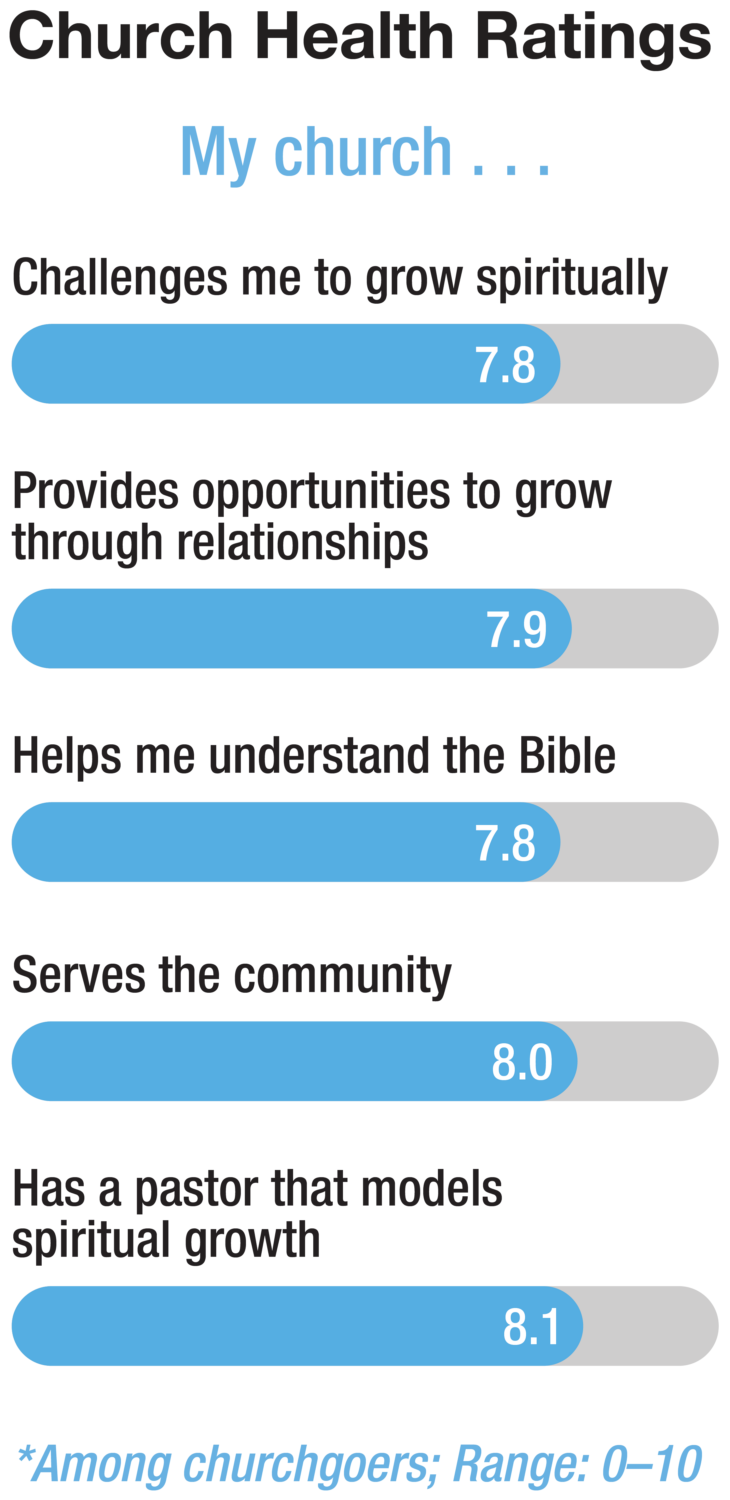
Overall, most churchgoers are satisfied with how their churches are ministering to them. Is there room for improvement? Of course. But across the country, churchgoers rate their churches at an average of 8 out of 10, with the most common response being 10 out of 10.
Take a minute to be encouraged—on the whole, churches in America are helping people grow spiritually! And for pastors who are used to hearing from the few (but loud) who make up the dissatisfied crowd, it’s encouraging to know they don’t represent the average churchgoer.
When we break down satisfaction demographically, however, there’s one group with lower satisfaction levels than others: Gen Z men.
Young Men Want More
In response to each of the five questions, Gen Z men report the lowest satisfaction. Something churches are doing across America isn’t connecting with the young men sitting in the pews—and their spiritual growth is suffering because of it.
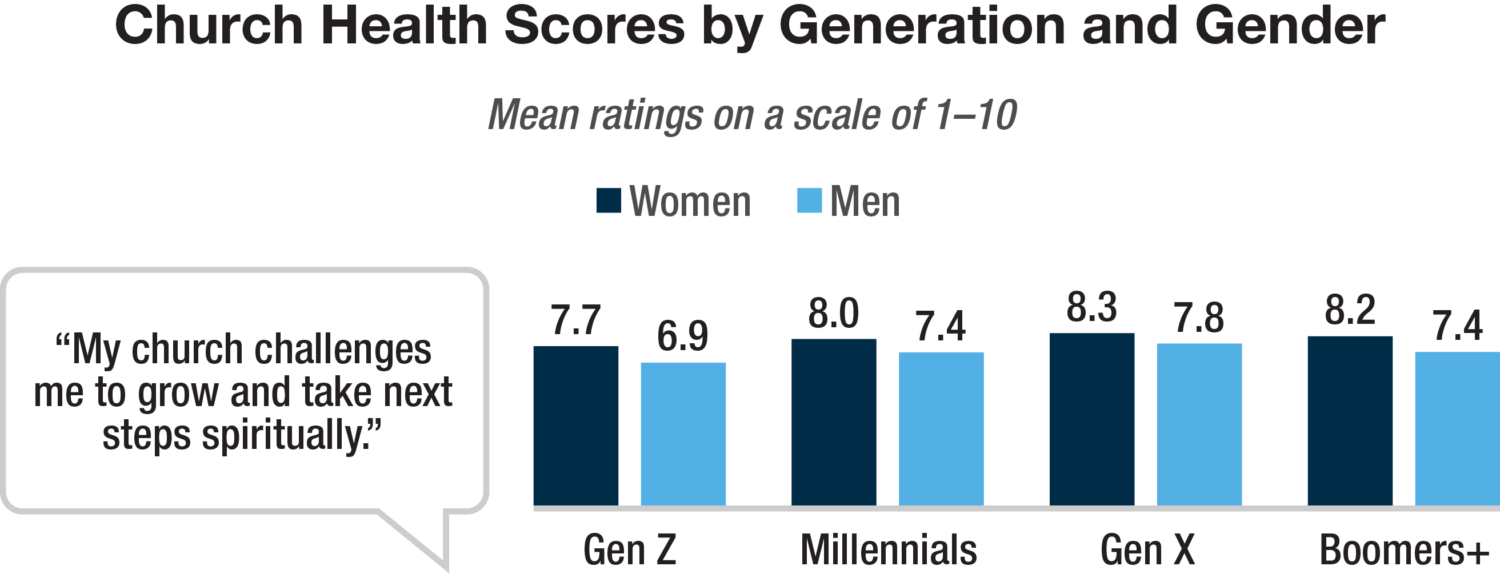
Church leaders need to think about how to approach and engage these young men. As we have seen time and again in our research, Bible engagement is one of the most effective catalysts for spiritual growth. How can churches and ministries invest in young men’s spiritual formation and activate them in the local church body?
Church Leaders Make the Difference
Among those who are very satisfied with their churches, 89 percent agree or strongly agree that church leaders encourage them to read the Bible. When people open the Bible with confidence during the week because of the guidance, depth, and application they received on a Sunday, they keep coming back—to both the Bible and the church.
As Christians participate in the local church, the encouragement they receive to engage Scripture can spark meaningful and profound change. Christians who live as conscious and active members of the body of Christ experience the life-giving grace that flows there.
“[Jesus] is the head of his body, the church; he is the source of the body’s life. He is the first-born Son, who was raised from death, in order that he alone might have the first place in all things.” (Colossians 1:18 GNT)
Download the Full Chapter | Take the Church Health Assessment