
The State of the Bible in 2026
With an increase in Bible sales and reports of greater attendance at religious events over the last year and a half, many researchers, cultural commentators, and community leaders were hopeful that the tide was turning. In our 2025 report, the State of the Bible team was cautiously optimistic about an uptick in Bible Use and Scripture Engagement among Americans. Unfortunately, our 2026 survey responses point to a general return to 2024 levels of Bible Use and Scripture Engagement. But the story isn’t that simple. Below the surface, we see that America’s relationship with the Bible is… complicated.
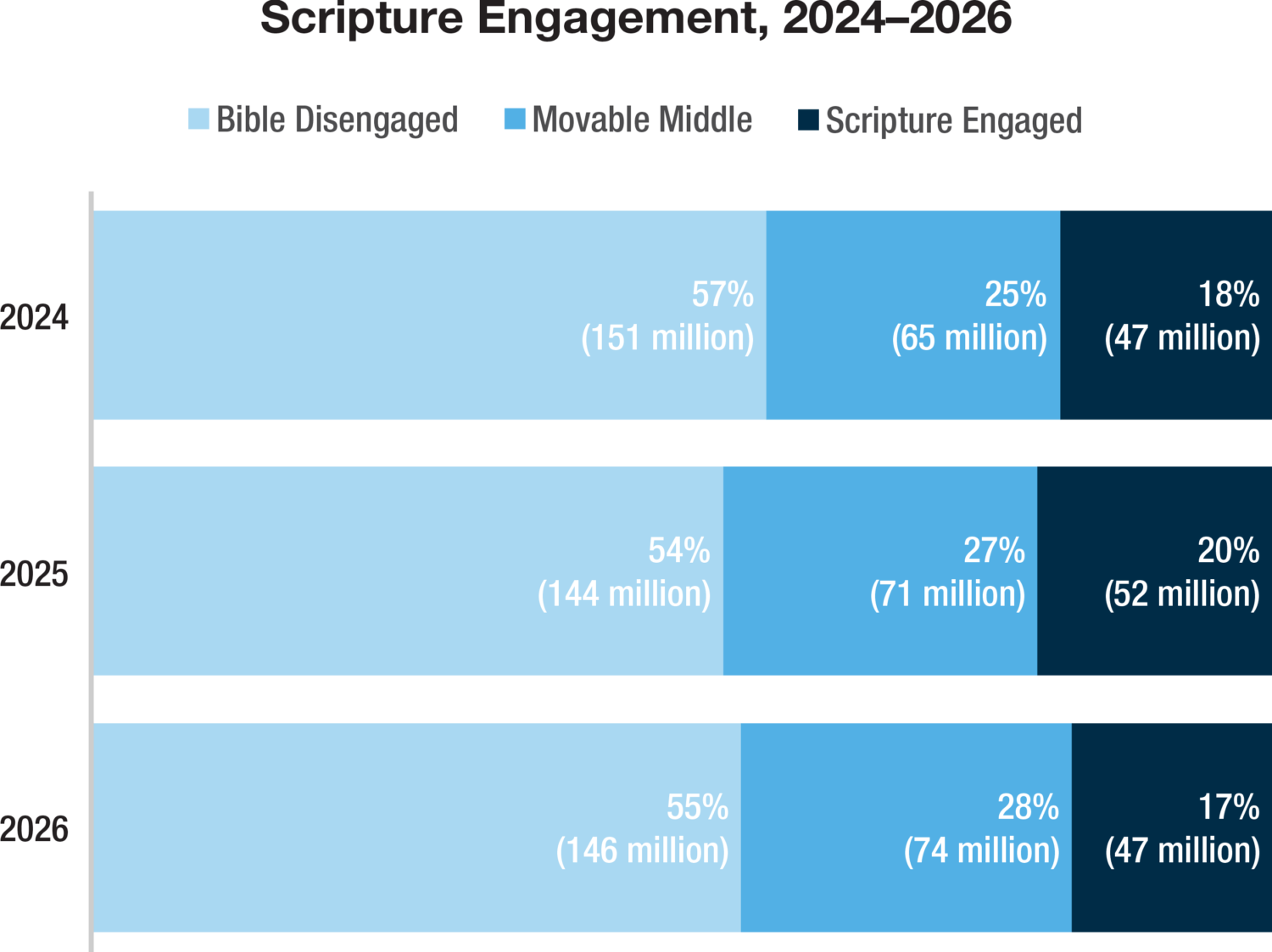
This month we’re considering Scripture engagement trends, Bible use, and Bible engagement practices. In the coming months, we’ll explore other Bible-related topics including AI and the Bible, parenting with the Bible, church health, calling, human flourishing, and forgiveness.
For a deep dive into America’s relationship with the Bible, grab your free download of Chapter 1 of the 2026 State of the Bible report. And make sure to sign up for our newsletter to receive updates about upcoming chapters of the 2026 report, to be released monthly through November.
So… what’s the story of the Bible in America today?
Why Did People Put the Bible Back Down?
Bible Use tracks the frequency aspect of Scripture Engagement—how often people use the Bible. In 2025, we saw a spike in Bible Use, primarily among Occasional Bible Users that vanished in 2026. Active Bible Users (weekly or more) remain stable across the three-years.

Last year the increase in Bible Use was particularly strong among men. This year male Occasional Bible Users dropped from 17 percent back down to 10 percent. While most of the increase in Occasional users from 2025 was lost, there is still a positive trend. Men have seen marginal growth in the Active Bible User category, from 22 percent in 2024 to 24 percent in 2026. And in the past three years, the gap in Active Bible Users between men and women has narrowed. This should encourage ministry leaders as they continue initiatives to increase Bible use among men.
In addition to changes in Bible use among men, we see other interesting and unexpected demographic shifts. Bible Use is down among college educated Americans, but up among less educated Americans. Some regions of the country have seen drops in Bible use (New England and the Pacific) while others are seeing increases (mid-Atlantic and East South Central).
A Reason For Hope
We also see growth in the Movable Middle, a group of people who are open to and even curious about the Bible, but don’t regularly engage it. Though Bible Use has returned to 2024 levels nationally, many people remain open and interested.
When we see millions of Americans pick up the Bible and then put it back down, it’s easy to view that as a step backward. But anyone who has tried to build a new habit knows that the first few attempts and failures are necessary steps of the journey.
The growth of the Movable Middle tells us that people are still open to the Bible. But maybe they just don’t know what to do with it because the Bible is a massive, complex book. This is an invitation for pastors and church leaders to step into the gap and show people how to engage with God’s Word.
How Much of the Bible has America Read?
We asked a new question this year: “How much of the Bible have you read?” It’s a way of exploring what keeps some people from reading, and what causes others to read it all.
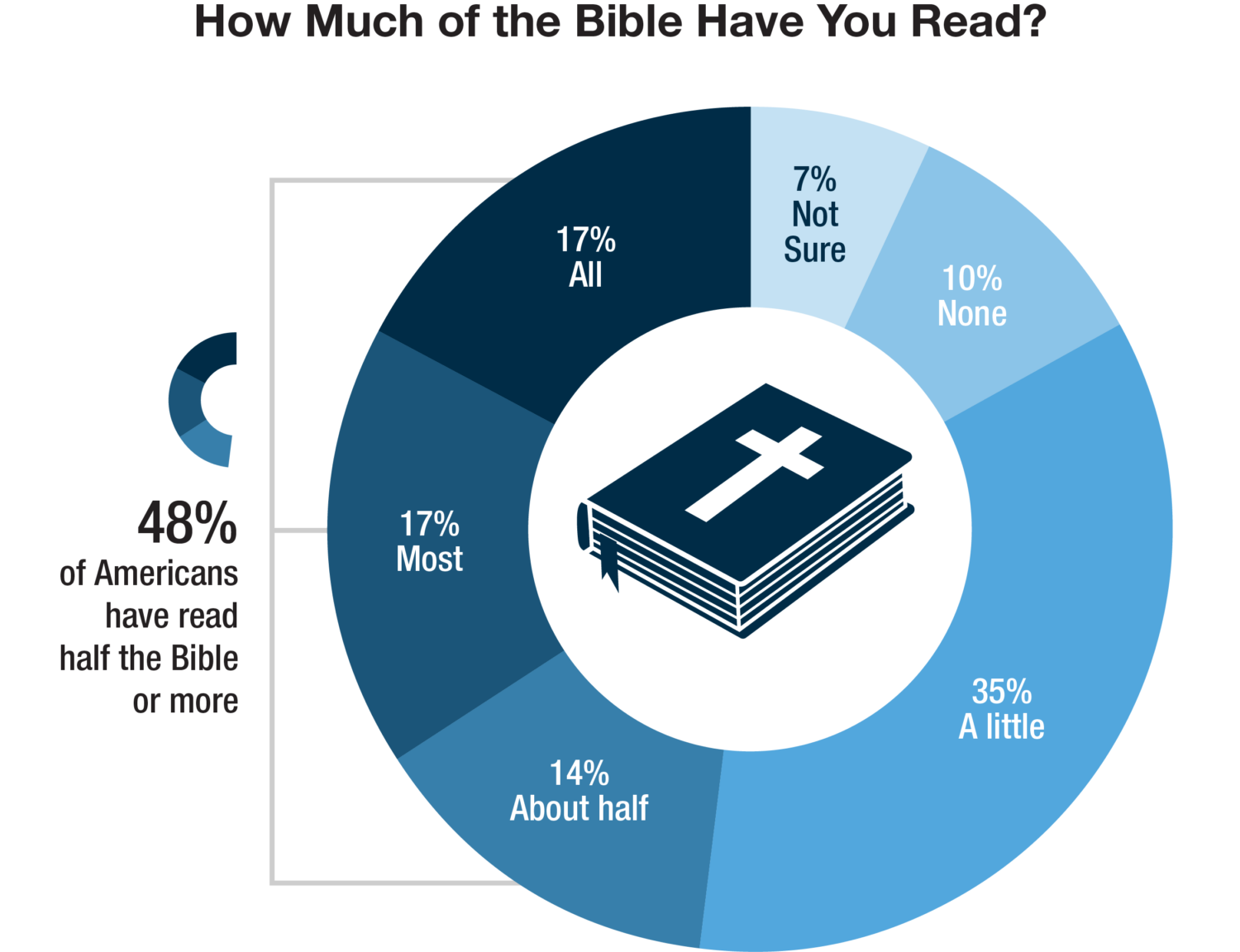
Though only about one in six Americans (17%) say they have read the whole Bible, half of Americans say they’ve read half of the Bible or more. Nearly two-thirds (64%) of those who strongly agree that “The message of the Bible has transformed my life” have read most or all of the Bible. When people experience the gospel, they want the Bible.
Conversely, of those who agree with the question, “The Bible was written to control or manipulate other people,” three out of five (60%) say they’ve read little or none of it. It might be that they are judging the book by its cover (or their perception of the people who represent it). We invite skeptics to consider it more deeply for themselves and we encourage Christians to be so immersed in the Bible that they represent it rightly.
Winging It Doesn’t Work
We also asked about different engagement practices. Nearly three-quarters (74%) of those who say they follow a Bible reading plan also say they have read most or all of the Bible.
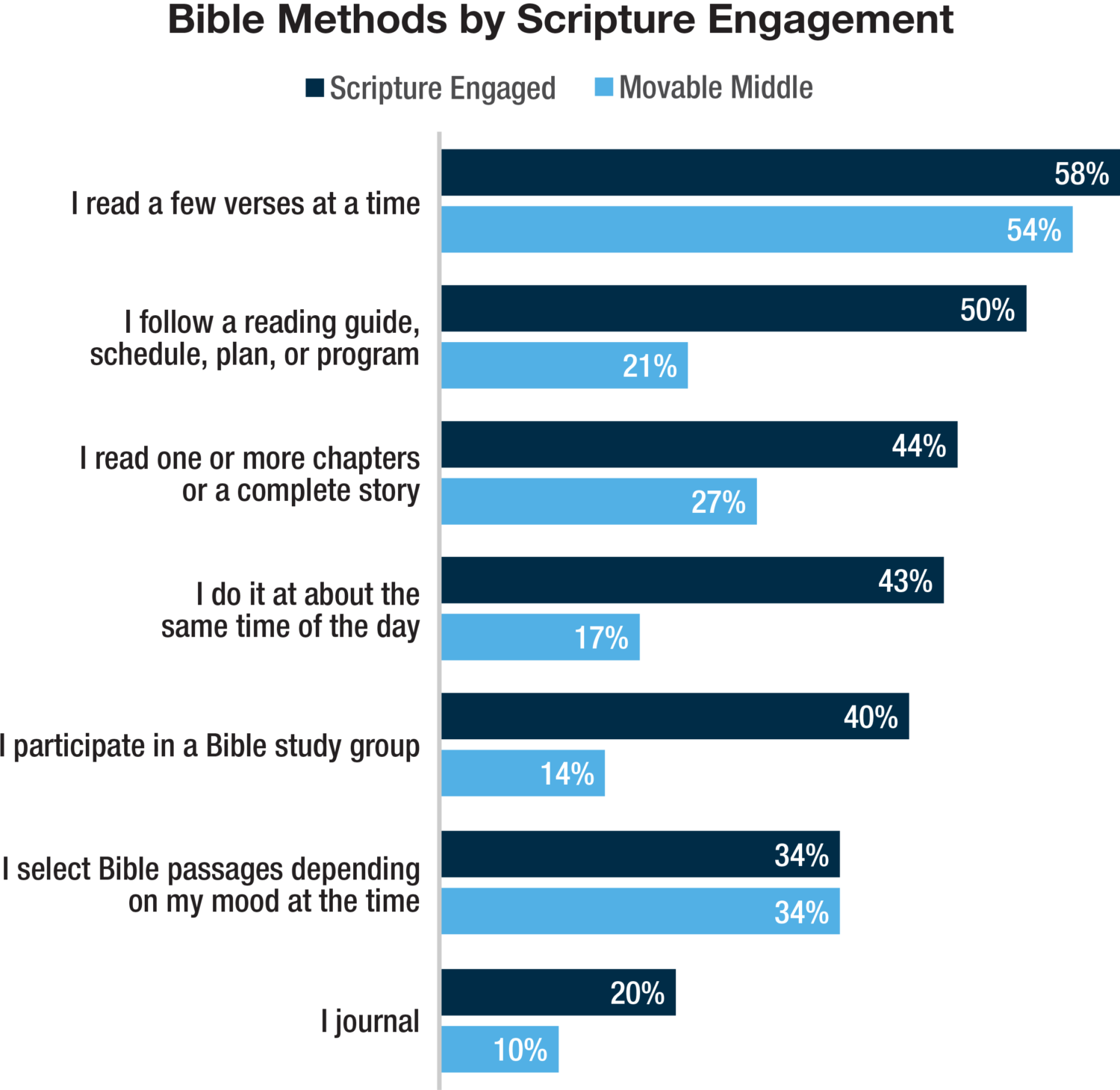
Scripture Engaged individuals are more likely to read complete chapters or stories, follow a reading plan, put the Bible into their regular schedule, and be a part of a Bible study. Movable Middle Bible Users are more likely to read a few verses at a time and choose them based on their mood. While we encourage all Bible use, it’s clear that some methods are better at moving someone to be more engaged with God’s Word. Leaders can use these pathways to create opportunities for meaningful Bible use in their ministries.
Print vs. Digital. Or Both?
Which format is most likely to reach people—digital, audio, video, or print copies of the Bible? While digital formats offer accessibility, print Bibles are still the favorite. More than three-quarters of Bible users read a printed Bible at least once a month.
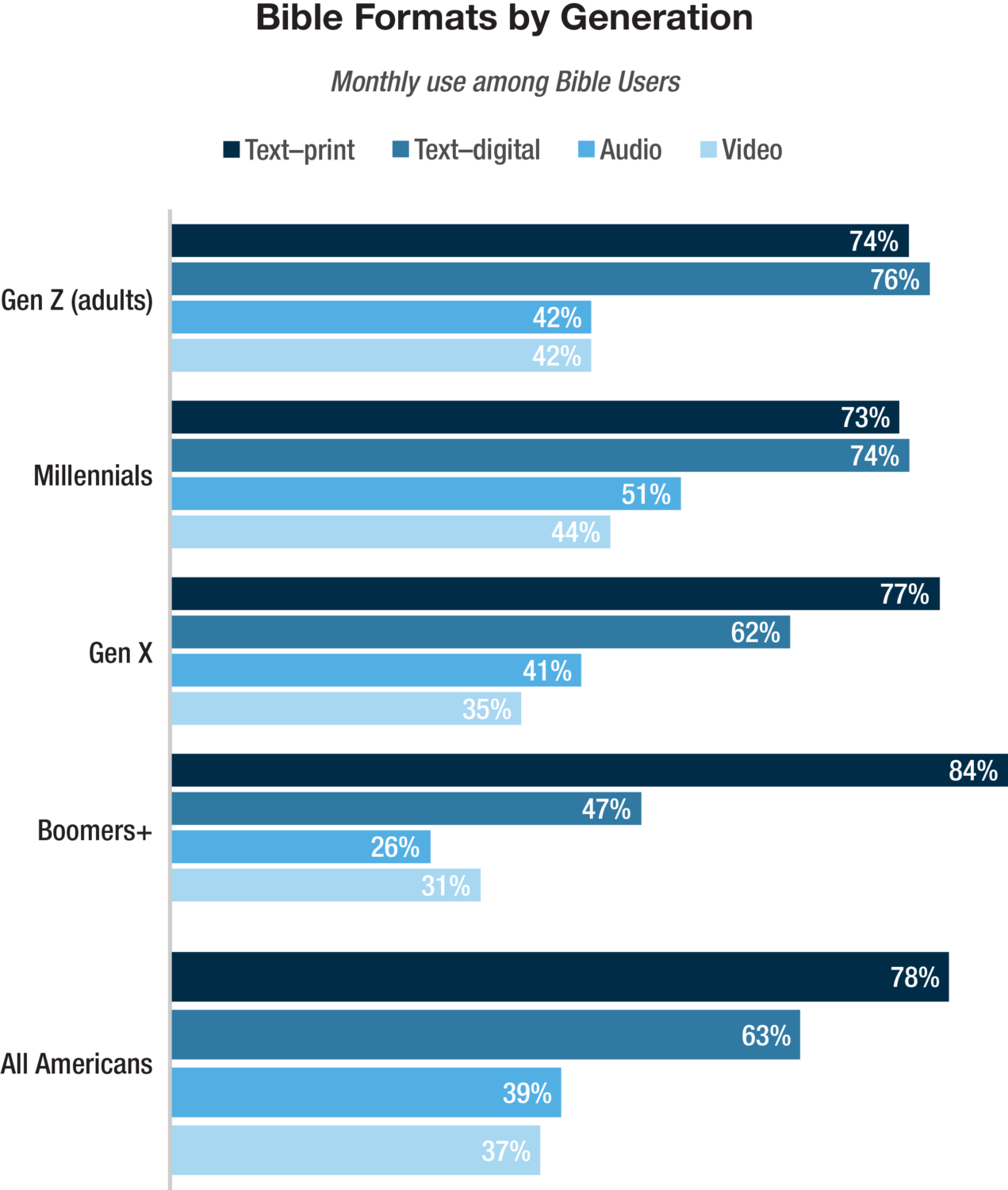
Younger generations are using the Bible in all formats, opening more opportunities for engagement than ever before. Digital Bible use is edging out print for Gen Z and Millennial Bible users, but it’s worth noting that for these generations it’s not an “either-or” but a “both-and.”
Audio and video formats are also more popular among Gen Z and Millennials than with older generations. Non-print formats come with distractions. But they also make it possible listen to the Bible while driving to work, practice a verse with a memorization app in the waiting room, and share passages with friends on social media.
Bible format can be an intentional engagement tool instead of an afterthought. Leverage multiple format options to purposefully engage the people in your care with the Bible. To combat screen fatigue, try printed song lyrics and placing Bibles at each seat for screen-free services. Or to intentionally steward the digital medium, choose a digital Bible plan to do as a group.
The challenge is to spend genuine time with God while also writing his words on our doorposts and wearing them on our foreheads as we come and go (Deuteronomy 6:6–9).
A Time for Discipleship
America’s relationship with the Bible is complicated. Maybe because the Bible itself is, in many ways, complicated! Let’s not miss this discipleship opportunity in America. People who newly opened the Bible last year may have since closed it. But they themselves remain open. How can we help them navigate a complex book so that they can experience the simple and life-transforming message within?